Managing Diabetes at Home – Home Care Tips for Families
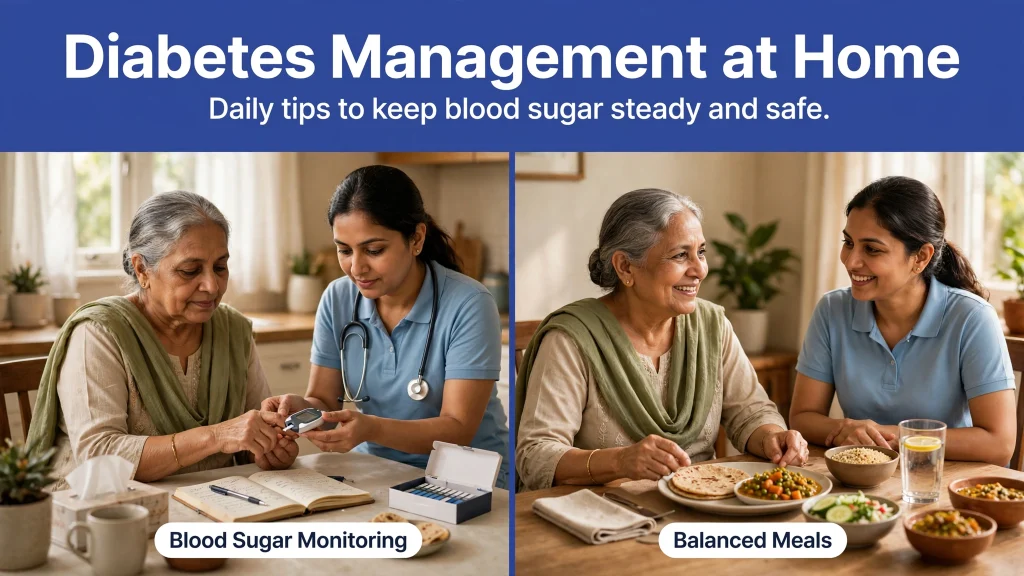
Diabetes Management at Home: Essential Tips for Caregivers
Diabetes management doesn’t happen in quarterly doctor visits — it happens in the small, daily decisions families make at home: what’s for dinner, whether the glucometer reading got logged, whether someone checked for a blister before bed. Done consistently, these small habits are what keep a loved one’s diabetes genuinely under control rather than just “managed” on paper. Here’s what that looks like in practice.
Monitoring Blood Glucose and Medications
How to Use a Glucometer and Log Readings
Testing blood glucose is only useful if the readings actually get tracked over time — a single number tells you almost nothing, but a week of readings tells your doctor a great deal. Keep a simple log (paper or an app) noting the time, reading, and anything relevant like a meal or missed dose, and bring it to every appointment. Most modern glucometers only need a small blood sample and give a reading in seconds, so the barrier is really about building the habit, not the technology.
Insulin and Medication Schedule Reminders
Missed or mistimed doses are one of the most common — and most preventable — causes of poor blood sugar control at home. Setting fixed times, using pill organizers, or simple phone alarms all help. If your loved one also needs support with actual insulin administration, that’s exactly the kind of task a trained home nurse handles reliably.
Diet & Nutrition for Diabetes
Balanced Meal Plans
There’s no single “diabetic diet” — but consistent meal timing and balanced portions of protein, fiber, and complex carbohydrates make blood sugar far easier to predict and control than irregular eating patterns. We go into meal planning in more depth in Nutrition for Recovery: Diet Tips for Home Patients, which covers portioning and food choices for home patients more broadly.
Portion Control and Low-GI Foods
Simple swaps make a real difference in everyday Indian cooking — brown rice or millets (bajra, jowar) instead of white rice, whole wheat roti over refined flour, and more legumes and vegetables relative to starches. None of this requires special “diet food” — it’s more about proportion and consistency than restriction.
Foot and Skin Care
Daily Foot Inspections
Diabetes can reduce sensation in the feet over time, which means small injuries — a blister, a cut, a callus — can go unnoticed and worsen into serious infections before anyone realizes something’s wrong. A daily visual check (using a mirror if needed to see the sole) catches problems while they’re still minor.
Hygiene to Avoid Infections
Clean, dry feet, well-fitted shoes, and prompt attention to any cuts or cracked skin go a long way in preventing complications. This is a small daily habit, but it’s one of the most effective ways to avoid a much bigger medical problem down the line.
Exercise & Activity
Safe Physical Activities
Regular movement — a daily walk, light housework, even seated exercises for those with limited mobility — genuinely helps with blood sugar control, not just weight management. The key is consistency over intensity; a short daily walk beats an occasional strenuous one.
Integrating Physiotherapy if Needed
For patients recovering from another condition alongside diabetes, or with limited mobility, a structured physiotherapy plan can safely build activity levels back up. Our guide on post-operative physiotherapy at home covers how a professional builds a safe, progressive activity plan — the same principles apply for anyone easing back into movement.
Emergency Signs & When to Seek Help
Recognizing Low and High Blood Sugar
Both hypoglycemia (low blood sugar) and hyperglycemia (high blood sugar) need prompt attention, and caregivers should know the difference. Mayo Clinic notes that early signs of low blood sugar include pale skin, hunger or an upset stomach, a fast or irregular heartbeat, and trouble concentrating — symptoms that can escalate quickly if untreated. Persistently high readings, alongside excessive thirst, frequent urination, or fatigue, point toward hyperglycemia and should also be flagged to the treating doctor rather than waiting it out. India’s Research Society for the Study of Diabetes (RSSDI) is the leading professional body for diabetes care guidelines in the country, and a good reference point if you want to go deeper on management protocols with your doctor.
Keeping Emergency Supplies on Hand
Keep a small emergency kit accessible at all times — glucose tablets or a sugary snack for sudden lows, a list of current medications and dosages, and emergency contact numbers, including the treating doctor. If you’re also using telehealth to manage ongoing care, our guide to telemedicine and home healthcare covers how virtual check-ins can catch trends between in-person visits.
Frequently Asked Questions
How often should blood sugar be checked at home?
This depends on your doctor’s advice — typically before meals and at bedtime for those on insulin, or once daily for those on oral medication. Keep a written record to share at each check-up.
Can home caregivers administer insulin?
Yes, if properly trained. Nurses handle injections as a matter of course, and family members can learn to give basic insulin shots safely under professional guidance.
What if appetite is poor?
Offer small, frequent, healthy snacks — fruit, nuts, or similar — and keep hydration up. Monitor blood sugar more closely during any stretch of reduced food intake, since it can shift readings unpredictably.
Is special footwear needed for diabetics at home?
Well-fitted, protective footwear helps prevent injuries that can go unnoticed due to reduced sensation. Check feet daily for cuts or blisters, and consult a specialist if anything looks concerning.
How does stress affect diabetes at home?
Stress can raise blood sugar levels. A calm, restful environment and simple relaxation habits help, and it’s worth noting readings during particularly stressful periods to track the pattern.
Managing a loved one’s diabetes at home takes consistency — not perfection. Talk to Caroline Healthcare about nursing support for monitoring, medication, and daily care.