Stroke Rehabilitation at Home – Guide for Caregivers
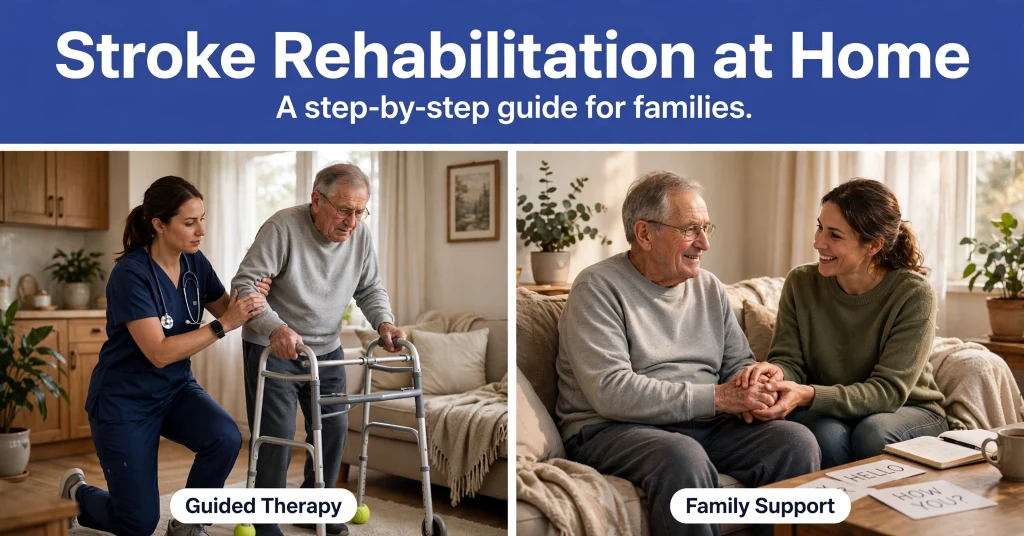
Stroke Rehabilitation at Home: A Step-by-Step Guide
The days right after a stroke are disorienting for any family — sudden hospitalization, a flood of new medical terms, and then, often sooner than expected, discharge. What happens next, at home, matters as much as anything that happened in the hospital. The brain’s ability to recover function after a stroke — a process called neuroplasticity — depends heavily on consistent, well-structured rehabilitation, and a large share of that work happens in the weeks and months after discharge, not during it.
Here’s what a well-run home stroke rehabilitation plan actually looks like.
Understanding Home Stroke Rehab
Goals: Mobility, Speech, and Independence
Stroke rehab isn’t one single therapy — it’s usually a combination of physical, speech, and occupational therapy working toward the same goal: helping the patient regain as much independence as possible. That might mean walking unassisted again, being able to swallow safely, forming clear sentences, or simply managing a spoon without help. The Indian Stroke Association emphasizes early, multidisciplinary rehabilitation involving physiotherapists, occupational therapists, and speech therapists, alongside positioning and passive movement to prevent stiffness and bedsores — a reminder that rehab isn’t just exercise, it’s also careful daily management to prevent secondary complications.
Timeline: Acute vs. Long-Term Phases
The first three months after a stroke are generally when the brain is most responsive to rehabilitation, which is why early, consistent therapy matters so much. That said, recovery doesn’t have a hard stop — many patients continue to see gains for a year or more with sustained effort, just at a slower pace than the initial months.
Physical Therapy Exercises for Stroke
Walking, Balance Drills, and Strengthening Weak Limbs
Physical therapy after stroke typically starts small — sitting balance, supported standing — before progressing to assisted walking and, eventually, independent mobility. Balance drills reduce fall risk, which is a real concern for stroke survivors given one-sided weakness is common. If your loved one is also recovering from a recent surgery alongside stroke-related mobility loss, the exercise progressions in our guide to post-operative physiotherapy at home follow similar early-mobility principles.
Use of Assistive Devices
Walkers, quad canes, and ankle-foot orthoses (braces) aren’t a sign of failure — they’re tools that let patients practice walking safely while strength returns. A physiotherapist will typically recommend the right device based on how much support the patient currently needs, and scale it back over time as they improve.
Speech and Occupational Therapy
Simple Speech Exercises
For patients with speech difficulty (aphasia) or slurred speech (dysarthria), therapy often starts with repeating single words, then short phrases, and building up to full sentences and reading aloud. Consistency matters more than intensity here — a few short sessions daily tend to outperform one long session.
Fine Motor Practice
Occupational therapy focuses on the small movements needed for daily tasks — buttoning a shirt, holding a spoon, turning a doorknob. Simple household objects like puzzles, buttons, or clothespins often double as effective practice tools between formal therapy sessions.
Medication & Medical Care at Home
Blood Pressure and Diabetes Control
Uncontrolled blood pressure and blood sugar are two of the biggest risk factors for a second stroke, which makes consistent monitoring at home just as important as the physical rehab itself. This is an area where a home nurse’s involvement can matter — tracking vitals, ensuring medication timing, and flagging concerning trends to the treating doctor before they become emergencies.
Medications and Diet
Recovery nutrition also plays a bigger role than most families expect — supporting healing, managing swallowing difficulties safely, and helping control the same blood pressure and blood sugar factors mentioned above. We cover this in more depth in Nutrition for Recovery: Diet Tips for Home Patients.
The Role of Family & Caregivers
Encouragement and Routine Scheduling
Recovery is slow and often non-linear, which can be discouraging for patients. A consistent daily routine — same times for therapy, meals, and rest — helps create the structure that makes steady progress more likely, and family encouragement genuinely accelerates engagement with therapy.
When to Seek Help
Caregivers should know the warning signs of a second stroke, since acting quickly matters enormously for outcomes. Mayo Clinic recommends the BE-FAST check: sudden loss of balance or coordination, vision problems, facial drooping, arm weakness, and trouble speaking or understanding speech are all signs to treat as a medical emergency and seek immediate care for. New weakness, sudden confusion, or fever in a recovering stroke patient should never be “watched for a day” — get medical help right away. Mayo Clinic News Network
Frequently Asked Questions
How soon should rehab start after a stroke?
Ideally, rehabilitation begins within days to weeks of the stroke — often while the patient is still hospitalized — and should continue immediately after discharge without a gap.
Can I do exercises alone, or do I need a therapist?
A therapist should guide the first several sessions to ensure exercises are done safely and correctly. Once caregivers have learned the movements, they can assist with daily practice at home between professional sessions.
What if the patient feels tired or discouraged?
Rest is genuinely important — pushing through exhaustion doesn’t speed recovery. Gentle encouragement, small daily goals, and celebrating incremental progress tend to sustain motivation far better than pressure.
How can we help prevent another stroke?
Controlling risk factors is key: taking blood pressure and cholesterol medication consistently, following dietary guidance, staying appropriately active, and keeping up with regular medical check-ups.
Are there at-home monitoring devices that help?
Yes — home blood pressure monitors and glucometers let families track key numbers between doctor visits, and pairing that with telehealth check-ins (see our guide on telemedicine and home healthcare) means a physician can adjust the care plan quickly if something changes.
Not sure what level of support your loved one’s stroke recovery needs? Talk to Caroline Healthcare — we’ll help you build a rehab plan that combines the right therapy, nursing oversight, and family involvement.