Delhi Pollution Season 2026: Protecting Elderly Parents at Home
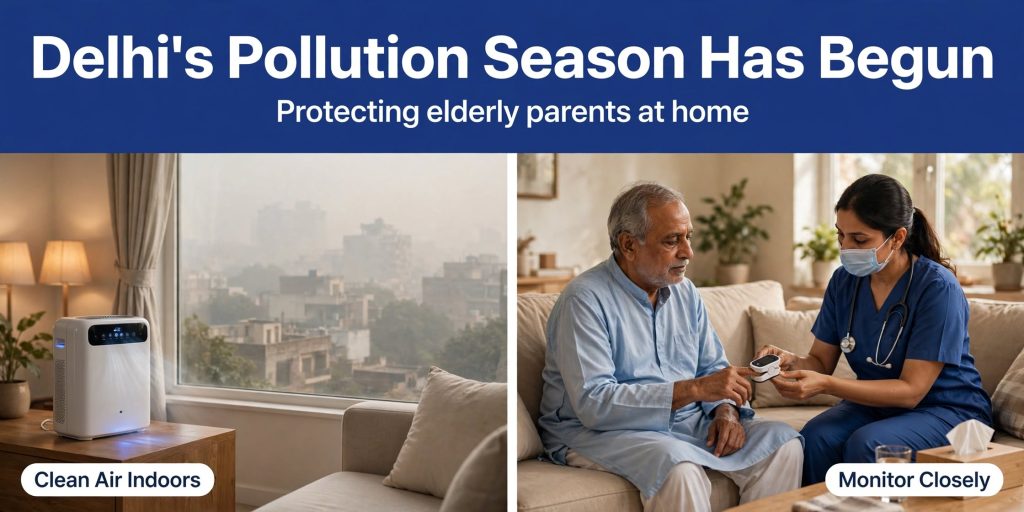
Delhi’s Pollution Season Has Begun: Protecting Elderly Parents at Home
Delhi-NCR’s air quality just crossed a threshold that matters. On September 1, 2026, the Commission for Air Quality Management (CAQM) invoked GRAP Stage-I across the entire region after Delhi’s average AQI hit 226 — the “poor” category — with the India Meteorological Department forecasting it to remain there for at least the next couple of days. If this feels early, it is: Delhi’s pollution typically peaks between October and January, which means this is the opening stretch of a season that will likely get considerably worse before it gets better.
For families with elderly parents at home, this is worth planning around now, not once the air turns hazardous.
What’s Actually Happening
GRAP — the Graded Response Action Plan — is Delhi-NCR’s tiered response system, escalating through four stages as AQI worsens: Stage I (“Poor,” AQI 201–300), currently in effect; Stage II (“Very Poor,” 301–400); Stage III (“Severe,” 401–450); and Stage IV (“Severe Plus,” above 450), which brings the strictest restrictions, including construction bans and truck restrictions into the city. Hospitals in Delhi have already reported a 30–40% rise in respiratory cases as air quality has worsened over the past couple of weeks, with doctors specifically flagging children and the elderly as most affected.
Why Elderly Parents Face Outsized Risk
Aging lungs and hearts simply cope with fine particulate matter (PM2.5) less well. The WHO’s air quality guidelines put the annual safe threshold for PM2.5 at 5 µg/m³ — Delhi’s typical levels run more than 20 times that during pollution season. For elderly parents specifically:
- Existing heart or lung conditions worsen disproportionately. COPD, asthma, and heart disease all flare more severely with sustained PM2.5 exposure, and elderly patients are more likely to have one of these conditions already.
- Cardiac risk rises, not just respiratory risk. Air pollution is a genuine cardiovascular stressor — it’s not only a “breathing” problem, which is easy to underestimate.
- Symptoms can be subtler and easier to miss than in younger adults — increased fatigue or reduced activity tolerance, rather than a dramatic cough.
Protecting Elderly Parents: What Actually Helps
- Track the AQI daily, not just when it “feels smoggy” — Delhi’s air can look clear while PM2.5 levels remain unhealthy. Several free apps and CAQM’s own site provide real-time local readings.
- Keep outdoor time limited on poor-AQI days, especially during early morning hours when pollution often concentrates. This doesn’t mean total confinement — just avoiding prolonged outdoor activity when the numbers are bad.
- Use HEPA air purifiers in the rooms where your parent spends the most time — bedroom and living room matter more than covering the whole house.
- N95 masks (not basic cloth or surgical masks) for any necessary outdoor trips — the fit and filtration matter significantly more than people expect.
- Keep windows closed during peak pollution hours, opening briefly instead during any short low-AQI windows if ventilation is needed.
- Monitor blood pressure and any existing heart or lung condition more closely during this season specifically — this is exactly when baseline conditions destabilize.
- Don’t ignore new or worsening symptoms — persistent cough, breathlessness, chest tightness, or unusual fatigue warrant medical attention promptly rather than being written off as “just the pollution.”
How Caroline Healthcare Can Help This Season
- In-home monitoring for parents with COPD, asthma, or heart conditions — a nurse tracking oxygen levels, breathing patterns, and blood pressure through the worsening months, catching deterioration before it becomes an emergency.
- Reducing unnecessary outdoor exposure — home-based nursing and physiotherapy visits mean your parent doesn’t need to travel through hazardous air for routine care.
- Telehealth follow-ups (see our guide on telemedicine and home healthcare) for quick physician check-ins without an outdoor trip.
- Guidance on setting up the home environment — air purifier placement, monitoring routines, and knowing exactly when a symptom needs urgent attention versus home management.
Frequently Asked Questions
Is GRAP Stage-I actually serious, or is this routine?
It’s a real, meaningful shift — “poor” air quality genuinely affects sensitive groups, elderly people included. It’s not yet the severe restrictions of Stage III or IV, but it’s the season’s opening signal, and conditions typically worsen from here through winter.
Should my elderly parent stop going outside entirely?
Not necessarily — but limiting prolonged outdoor activity, especially exercise, during poor-AQI stretches is a reasonable precaution, particularly for anyone with existing heart or lung conditions.
How do I know if my parent’s symptoms are pollution-related or something else?
Persistent cough, breathlessness, or chest tightness that appears or worsens alongside poor air quality days is a meaningful pattern worth flagging to their doctor — don’t wait to see if it resolves on its own.
Do air purifiers actually make a difference indoors?
Yes, meaningfully — a properly sized HEPA purifier in frequently-used rooms measurably reduces indoor PM2.5 levels, which matters since people (and especially elderly parents) often spend most of pollution season indoors anyway.
Where can I check the current AQI and GRAP stage?
CAQM’s official site tracks this in real time — we’ve linked it below rather than quoting a number that’ll be outdated within days.
Worried about a parent with a heart or lung condition this pollution season? Talk to Caroline Healthcare — we can set up home monitoring so you catch changes early, before they become emergencies.