Nutrition for Recovery – Diet Tips for Home Patients
Nutrition for Recovery: Diet Tips for Home Patients
It’s easy to focus entirely on medication schedules and wound dressings during recovery and treat food as an afterthought — just “whatever they’ll eat.” But nutrition isn’t a side note to healing; it’s one of the main ingredients. A body repairing tissue, fighting infection, or rebuilding strength after illness needs meaningfully more from its diet than it does on an ordinary day.
Why Diet Matters in Healing
Protein for Tissue Repair, Vitamins for Immunity
Wound healing is genuinely protein-hungry work. Where a healthy adult typically needs around 0.8g of protein per kilogram of body weight daily, clinical nutrition research on wound healing — including guidance summarized by Mount Sinai — points to roughly 1.2–1.5g per kilogram daily during active healing, sometimes higher for larger wounds or pressure sores. For a 60kg patient, that’s the difference between roughly 48g and 75–90g of protein a day — a gap most families don’t realize exists until it’s pointed out.
Vitamins matter here too, particularly vitamin C (collagen formation) and zinc (immune function and tissue repair) — both come up repeatedly in wound-healing nutrition research as commonly under-consumed exactly when they’re needed most.
Hydration and Gut Health
Dehydration slows healing and worsens constipation — already a common side effect of pain medication and reduced mobility. Steady fluid intake through the day, plus fiber-rich foods, keeps digestion moving and supports overall recovery more than people usually expect from something so basic.
Key Nutrients and Foods
High-Protein Options
Eggs, dal, paneer, curd, milk, chicken, and fish are all accessible, everyday protein sources for Indian households — no need for expensive specialty products. ICMR-NIN’s 2024 Dietary Guidelines for Indians specifically recommend getting protein through varied whole foods rather than high-dose protein supplement powders, which the guidelines note carry risks like kidney strain with prolonged heavy use — worth knowing before reaching for a supplement tub as a shortcut.
Fiber and Probiotics
Whole grains, vegetables, fruits, and curd help counter medication-related constipation and support gut health generally. A small bowl of curd with meals does real, quiet work here.
Important Vitamins and Minerals
Citrus fruits, amla, and tomatoes for vitamin C; nuts, seeds, and whole grains for zinc. These don’t need to be separate “supplement” additions — they fit naturally into typical Indian home cooking.
Meal Planning & Sample Menus
Easy, Recovery-Friendly Meals
Dal-chawal with a side of sautéed spinach, a boiled egg with toast, khichdi with ghee and vegetables, curd rice with pomegranate — these are gentle on digestion, easy to prepare, and naturally hit several nutritional targets at once without needing to feel like “diet food.”
Adapting to Appetite and Restrictions
Recovery often comes with a smaller appetite than usual. Smaller, more frequent meals — five or six modest servings rather than three large ones — are often easier to manage and keep nutrient intake steadier throughout the day.
Feeding & Eating Assistance
Smooth or Pureed Diets for Swallowing Difficulty
For stroke or dementia patients with swallowing difficulty (dysphagia), texture matters as much as content — pureed or soft foods reduce choking risk considerably. If swallowing itself is the underlying issue, swallowing-specific exercises alongside dietary changes can help; our guide to post-operative physiotherapy covers how structured, guided exercise programs work in general, and a speech-language therapist can build a swallowing-specific plan where needed.
Making Meals Appealing
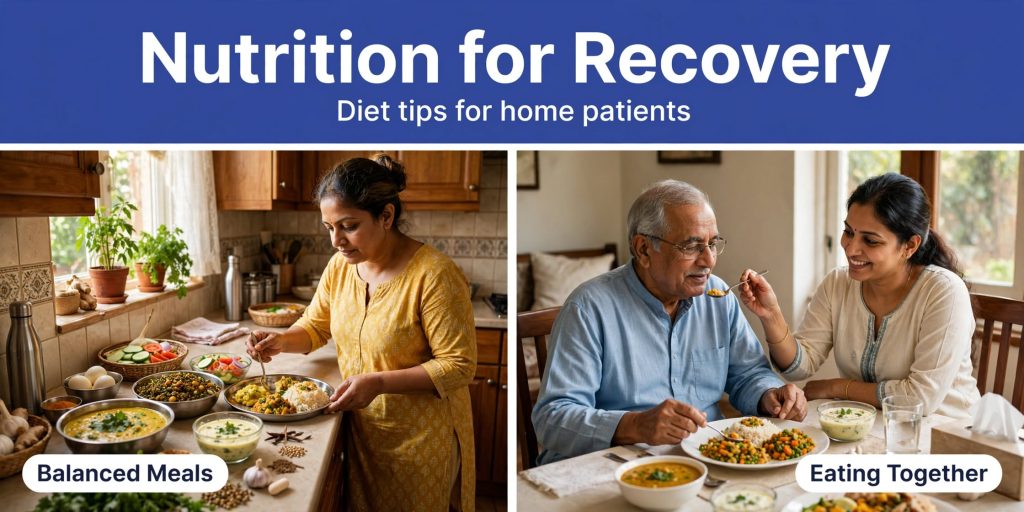
Appetite often follows enjoyment as much as hunger. Color, familiar flavors, and eating together as a family all genuinely help encourage intake — more effective, in practice, than repeatedly reminding someone to “eat more.”
Consulting Experts
The Role of a Dietitian
A dietitian can build a plan around the patient’s specific condition, appetite, and restrictions — not a generic template. Where diabetes, kidney disease, or other conditions are involved, professional guidance matters even more, since some standard “recovery diet” advice needs adjusting for those situations.
Monitoring Weight and Nutrition Status
Unintended weight loss during recovery is a signal worth paying attention to, not dismissing as normal. Regular, simple check-ins — weight, appetite, energy levels — help catch nutritional gaps early enough to correct them.
Frequently Asked Questions
What foods help wound healing?
Protein-rich foods (milk, curd, lentils, eggs), vitamin C (citrus fruits, amla), and zinc (nuts, whole grains) all support tissue repair directly.
How do I encourage an elderly patient to eat?
Make meals colorful and flavorful within dietary limits, offer smaller portions more frequently, and eat together — shared meals genuinely help stimulate appetite.
Are supplements needed?
A multivitamin — especially vitamin D and B12 — is often recommended for older patients, but should be guided by a doctor or dietitian rather than self-prescribed.
How much fluid should a patient drink?
Generally 2–3 litres a day, unless medically restricted for heart or kidney conditions. Light yellow urine is a simple, useful indicator of adequate hydration.
What if the patient is diabetic or has other dietary restrictions?
We tailor the plan accordingly — diabetic patients get low-GI foods with carbohydrate monitoring built in. Caroline’s dietitians can put together a plan customized to the specific condition.
Want a recovery diet plan built around your loved one’s specific needs? Talk to Caroline Healthcare about our dietitian-guided nutrition support.