Dementia Care at Home – Do’s & Don’ts for Family Caregivers
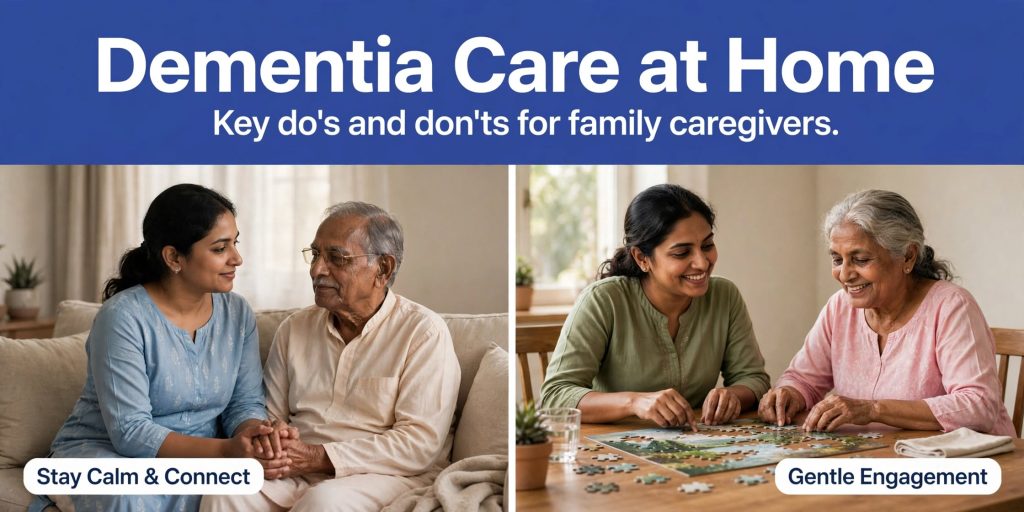
Dementia Care at Home: Key Do’s and Don’ts
Caring for someone with dementia often means relearning how to communicate with a person you’ve known your whole life. The instincts that work in every other relationship — correcting a mistake, reasoning through a disagreement — frequently backfire here. It’s not intuitive, and no family gets it right immediately. This guide covers what actually helps.
The World Health Organization notes that more than 55 million people live with dementia worldwide, and it is not a normal or inevitable part of ageing — despite mainly affecting older people. Alzheimer’s disease is the most common underlying cause, but “dementia” itself is an umbrella term for a group of conditions affecting memory, thinking, and daily functioning.
Understanding Dementia
Common Symptoms
Memory loss is the symptom everyone expects, but dementia often shows up first as behavior and personality changes — increased confusion, difficulty following conversations, mood swings, or withdrawing from activities they used to enjoy. Families frequently notice these shifts well before memory loss becomes obvious.
Progression and Planning Ahead
Dementia typically progresses gradually through early, middle, and late stages, with care needs increasing at each one. Planning ahead — for home safety, caregiving support, and eventually medical needs — is far easier to do calmly in the early stage than to improvise later under pressure.
Do’s: Helpful Strategies
Establish a Routine
A consistent daily schedule for meals, medication, and activities reduces confusion and anxiety significantly. Predictability is genuinely calming for someone whose internal sense of time and sequence is impaired.
Use Simple, Clear Communication
Short sentences, a calm tone, and one instruction at a time go a long way. Rushing or over-explaining tends to increase confusion rather than resolve it.
Keep the Home Safe
Remove tripping hazards, secure or lock away dangerous items (medications, sharp objects, stove controls), and consider door alarms if wandering is a risk. Many of the same home-safety principles from our guide to preventing falls at home apply directly here, alongside dementia-specific precautions.
Don’ts: Common Pitfalls
Don’t Argue or Repeatedly Correct
Correcting a factual mistake (“No, Dad, Mom passed away years ago”) rarely helps and often causes real distress, sometimes repeatedly, since the person may not retain the correction. Gently redirecting the conversation is usually kinder and more effective than insisting on accuracy.
Don’t Leave Them Unsupervised Near Hazards
Stairs, kitchens, and bathrooms deserve extra caution — impaired judgment combined with these spaces is a common source of injury. This doesn’t mean constant hovering, but it does mean thinking through where unsupervised moments are actually safe.
Avoid Overstimulation
Loud TVs, cluttered rooms, and too many people talking at once can genuinely overwhelm someone with dementia, sometimes triggering agitation that looks unrelated to its actual cause. A calmer environment often prevents behavioral episodes before they start.
Caregiver Self-Care
Seek Support to Prevent Burnout
The WHO specifically notes that the majority of dementia care worldwide is provided by family members — which is exactly why caregiver burnout is such a common, serious issue. Respite care, therapy, or simply another family member taking a shift isn’t indulgent; it’s what makes sustained caregiving possible at all.
Educate the Whole Family
Everyone involved in care — not just the primary caregiver — benefits from understanding dementia behaviors. A visiting relative who doesn’t know not to argue or correct can undo a calm afternoon in minutes, entirely unintentionally.
Professional Help & Support
Benefits of Trained Dementia Caregivers
Dementia-specific training matters — knowing how to de-escalate agitation, redirect confusion, and manage the specific safety risks involved isn’t intuitive, and it shows in day-to-day care quality. Caroline Healthcare’s nursing team is trained specifically in dementia and Alzheimer’s care, not just general elderly support.
Local Resources and Support Groups
The Alzheimer’s & Related Disorders Society of India (ARDSI), which has a dedicated Delhi chapter, offers caregiver support groups, counseling, and educational resources specifically for Indian families navigating this — a genuinely valuable resource alongside professional home care.
Frequently Asked Questions
How do I handle agitation or confusion?
Stay calm, use a gentle voice, and try redirecting their attention — moving to a quieter room or starting a simple activity often helps more than trying to talk them out of the distress directly.
Is it okay to tell them they’re wrong?
Usually not — it tends to cause frustration without actually helping. Validating their feelings and gently guiding them (“I know you’re worried, I’m here”) generally works better than correcting facts.
How can I prevent wandering?
Door alarms or decorative-looking locks, supervised walks, and ensuring they carry ID all help. Regular exercise can also reduce the restlessness that often precedes wandering.
Do activities like puzzles help?
Yes — mentally stimulating activities like simple puzzles or music can help maintain cognitive function and improve mood, even if they don’t slow the underlying condition.
When should I bring in professional home care?
When care needs exceed what the family can safely manage — 24/7 supervision, medical support, or simply to prevent caregiver burnout. Our dementia-trained nurses can step in for as much or as little support as your family needs.
Navigating dementia care with a loved one? Talk to Caroline Healthcare about our Alzheimer’s and dementia-trained nursing support.