Preventing Senior Falls at Home – Safety Tips for Families
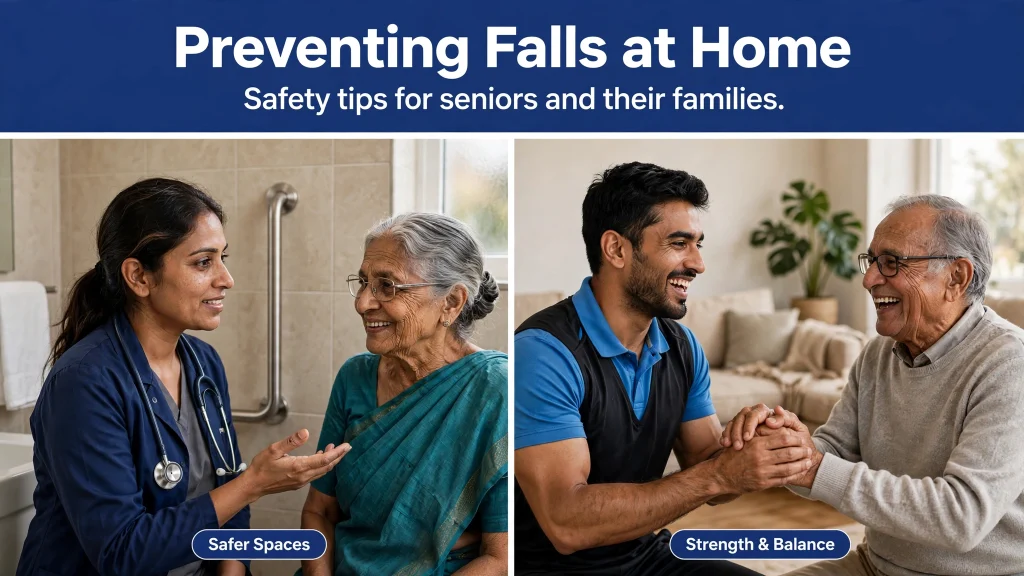
Preventing Falls at Home: Safety Tips for Seniors
Most families think of falls as bad luck — a slippery floor, an unlucky step. The data tells a different story. A systematic review published in the National Medical Journal of India pooled data from nearly 15,000 elderly Indians across multiple studies and found that roughly 31% of elderly persons in India experience a fall in a given year — meaning if you know four seniors, there’s a good chance one of them will fall in the next twelve months. Globally, the World Health Organization notes that falls are the second leading cause of unintentional injury death worldwide, after road traffic injuries, with older adults facing the highest risk of serious injury from a fall. National Medical Journal of IndiaWHO
The good news: most of what causes falls at home is fixable. Here’s where to start.
Why Fall Prevention Matters
The Real Scale of the Risk
That 31% figure isn’t just a statistic — it translates into hip fractures, head injuries, and a loss of independence that often changes the entire trajectory of someone’s later years. And the risk compounds: someone who’s already fallen once is significantly more likely to fall again, which is exactly why “it was just a slip” shouldn’t be the end of the conversation with a doctor.
Common Causes: Balance and Medication Side Effects
Falls are rarely caused by one thing alone. Age-related changes in balance and muscle strength combine with vision changes, chronic conditions like arthritis or diabetes, and — often overlooked — medication side effects. Many common medications for blood pressure, sleep, or anxiety can cause dizziness or drowsiness, quietly raising fall risk without anyone connecting the dots.
Home Safety Modifications
Remove Tripping Hazards
Loose rugs, trailing cables, and cluttered walkways are some of the most common — and most fixable — causes of falls at home. A five-minute walkthrough of the house, room by room, catches most of these before they cause a problem.
Install Grab Bars in Bathrooms and Stairs
Bathrooms are consistently one of the highest-risk areas in any home — wet, slippery, and full of hard edges. Grab bars near the toilet and inside the shower, plus secure handrails on both sides of any staircase, meaningfully reduce risk in the two areas where falls are most likely to happen.
Improve Lighting
Poor lighting, especially at night, is an easy fix with outsized impact. Night lights in hallways and bathrooms, plus brighter bulbs in frequently used areas, help aging eyes — which need significantly more light than younger ones to see clearly — actually see what’s in front of them.
Daily Habits to Reduce Risk
Non-Slip Footwear and Assistive Devices
Loose slippers and socks on smooth floors are a surprisingly common cause of falls. Supportive, non-slip footwear, and — where needed — a properly fitted cane or walker, make a real difference. A poorly fitted mobility aid can actually increase fall risk, so it’s worth getting the fit checked by a physiotherapist rather than guessing.
Regular Vision and Hearing Check-Ups
Vision changes creep up gradually enough that many seniors don’t realize how much they’ve adjusted around a problem instead of fixing it. Annual eye exams catch this early, and hearing loss — which affects balance more than people expect — deserves the same regular attention.
Reviewing Medications
Ask the treating doctor to periodically review all medications specifically for fall risk, especially after a new prescription is added. This single conversation catches a surprising number of preventable falls.
The Role of Caregivers
Supervision for High-Risk Activities
Bathing and toileting are consistently the highest-risk daily activities for falls, simply because they involve wet surfaces, transfers, and moments alone. For a senior with any history of unsteadiness, quiet supervision or standby assistance during these specific moments matters more than general monitoring throughout the day.
A Quick Response Plan
A simple alert system — a wearable panic button or a call system — means help arrives in minutes rather than however long it takes someone to be found. This matters enormously, since the physical injury from a fall is often made worse by a prolonged wait for help afterward.
When to Seek Professional Help
Physical Therapy for Strength and Balance
Balance and strength training genuinely reduces fall risk — this isn’t a soft recommendation, it’s one of the most evidence-backed interventions available. Our guide to post-operative physiotherapy at home covers how a structured program works in practice, and the same principles of guided, progressive exercise apply directly to fall prevention.
A Professional Home Safety Assessment
Sometimes the risks in a home aren’t obvious to the people living in it every day. A trained nurse or therapist can walk through the space with a trained eye and catch hazards a family might miss entirely — worth doing proactively, not just after a first fall.
Frequently Asked Questions
What are the most dangerous areas at home?
Bathrooms and stairs carry the highest risk. Grab bars near toilets and showers, plus secure handrails on both sides of any staircase, address the two highest-risk spots directly.
Should seniors use walkers or canes?
If they’re at all unsteady, yes — a properly fitted mobility aid (checked for correct height) meaningfully reduces fall risk. A physiotherapist can recommend and fit the right device.
How do I detect balance problems before a fall happens?
Watch for an unsteady gait, needing support to sit or stand, or a history of near-misses. Any of these warrant a professional fall-risk assessment rather than a wait-and-see approach.
Are wearable alert systems worth it?
Yes — medical alert systems or simple panic buttons mean help is summoned immediately rather than delayed. We can help set up monitoring so a fall doesn’t turn into a prolonged wait alone.
Can exercise really prevent falls?
Yes, meaningfully — strength and balance-focused exercise programs are among the most well-evidenced fall-prevention interventions available. We can arrange home physiotherapy built specifically around this.
Worried about a loved one’s fall risk at home? Talk to Caroline Healthcare — we can carry out a home safety assessment and set up the right mix of nursing support and physiotherapy.