
Heart Attack Warning Signs Everyone Should Know
September 17, 2026 · Caroline Healthcare
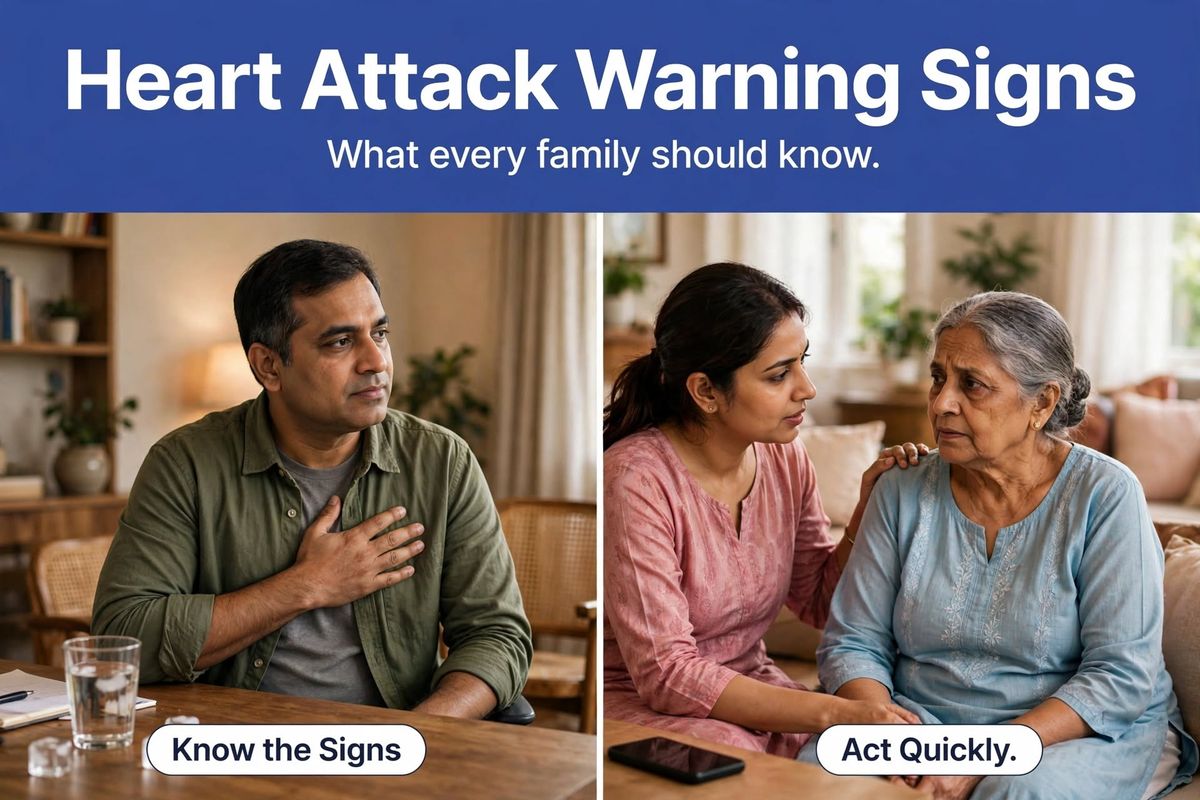
Heart attacks are striking Indians a decade earlier than the global average. Learn the warning signs in men, women, and elderly patients — and what to do in the first critical minutes.
Heart Attack Warning Signs Everyone Should Know
A few decades ago, a heart attack was something you worried about for your parents, not yourself. That's no longer true in India. The Indian Heart Association reports that nearly 25% of all heart attacks in India now occur in people under 40 — and Indians, on average, develop heart disease 5 to 10 years earlier than people in Western countries, often striking in their 30s and 40s rather than their 50s and 60s. An ICMR-backed autopsy study at a major Delhi hospital found that heart-related causes accounted for over 42% of sudden deaths in young adults, with the victims — mostly men in their 30s — frequently described by their own families as "apparently healthy."
That last detail is the one worth sitting with. Warning signs are often there. They're just easy to miss, dismiss, or not recognize for what they are — at any age. This guide is meant to fix that.
The Classic Warning Signs
According to the American Heart Association, these are the signs to take seriously, in anyone:
- Chest discomfort — pressure, squeezing, fullness, or pain in the center or left side of the chest, lasting more than a few minutes, or that goes away and comes back.
- Discomfort in other areas of the upper body — one or both arms, the back, neck, jaw, or stomach.
- Shortness of breath — with or without chest discomfort; this can sometimes appear before chest symptoms do.
- Other signs — breaking out in a cold sweat, nausea, or lightheadedness.
None of these need to be dramatic. Chest pain or pressure that keeps recurring and doesn't ease with rest can be an early warning sign appearing hours, days, or even weeks before the actual event — not just something that strikes suddenly out of nowhere.
Symptoms Often Look Different in Women
This is a genuinely important gap in public awareness. Women's most common symptom is still chest pain or discomfort, same as men — but women are considerably more likely to also experience symptoms that don't immediately register as "heart attack":
- Shortness of breath
- Nausea or vomiting
- Pain or pressure in the lower chest or upper abdomen
- Jaw, neck, shoulder, or upper back pain
- Unusual fatigue, indigestion, or even fainting
A woman having a heart attack without obvious chest pain is common enough that it's a leading reason women's heart attacks get missed or delayed in diagnosis — both by patients themselves and, historically, by the medical system.
Elderly Patients and Diabetics: An Extra Layer of Caution
This matters enormously for anyone caring for an aging parent. Mayo Clinic notes that older adults and people with diabetes are especially likely to have symptoms that "seem unrelated" to a heart attack at all — a brief pain in the neck or back, mild nausea, or general unwellness, without the dramatic chest pain people expect. Diabetic nerve damage can blunt pain signals specifically, making heart attacks in diabetic patients sometimes nearly silent. If an elderly parent seems "just a bit off" — unusually tired, mildly nauseous, a little short of breath — that's worth taking seriously rather than waiting for more obvious symptoms to appear.
Why This Is Happening Earlier in India
The reasons are well-documented and, encouragingly, mostly controllable: genetic predisposition (South Asians face meaningfully higher cardiovascular risk even at lower body weights than other populations), diets increasingly high in refined carbohydrates and sugar, sedentary urban lifestyles, chronic stress, smoking, and rising rates of diabetes — itself a major independent risk factor for early heart disease.
None of this means early heart disease is inevitable. It means awareness and proactive risk management — not just waiting for symptoms — matter more for Indian families than the global average guidance might suggest.
What to Do in the First Critical Minutes
If you or someone with you shows these warning signs, don't wait to see if it passes. Call emergency services immediately (India's unified emergency number is 112; many states also have dedicated ambulance lines like 108). Calling for emergency transport is genuinely faster than driving to a hospital yourself in most cases — emergency medical teams can begin treatment before you even arrive, and hospitals typically prioritize patients who arrive by ambulance. If you're not fully sure it's a heart attack, get it checked anyway. Acting on a false alarm costs far less than waiting on a real one.
If you're caring for a family member with heart disease or recovering from a cardiac event, Caroline Healthcare offers home nursing and monitoring support to help catch warning signs early. Learn more about our approach to heart health and stroke recovery.
Frequently Asked Questions
Can a heart attack happen without chest pain?
Yes — this is more common in women, elderly patients, and people with diabetes than most people realize. Nausea, unusual fatigue, and jaw or back pain can appear alone or before any chest discomfort.
Are young, healthy-looking people really at risk in India?
Yes, increasingly so. Nearly a quarter of heart attacks in India now occur in people under 40, driven by a combination of genetic predisposition and modern lifestyle factors — this isn't only an older person's disease anymore.
What should I do if I think a family member is having a heart attack?
Call emergency services immediately rather than driving them yourself where possible — EMS can begin treatment en route. Don't wait to "see if it gets better."
How can I reduce my own risk?
Regular activity, managing blood pressure and blood sugar, not smoking, and routine health check-ups all meaningfully reduce risk — quitting smoking alone cuts coronary heart disease risk by 50% within a year.
Is it worth getting a heart check-up if I feel fine?
Given how often early heart disease shows no obvious symptoms — especially in India's younger-than-average patients — a baseline cardiovascular check-up, particularly with a family history of heart disease, is a reasonable precaution rather than something to postpone indefinitely.