World Physiotherapy Day 2026 – Physiotherapy for Heart & Stroke
September 15, 2026 · Caroline Healthcare
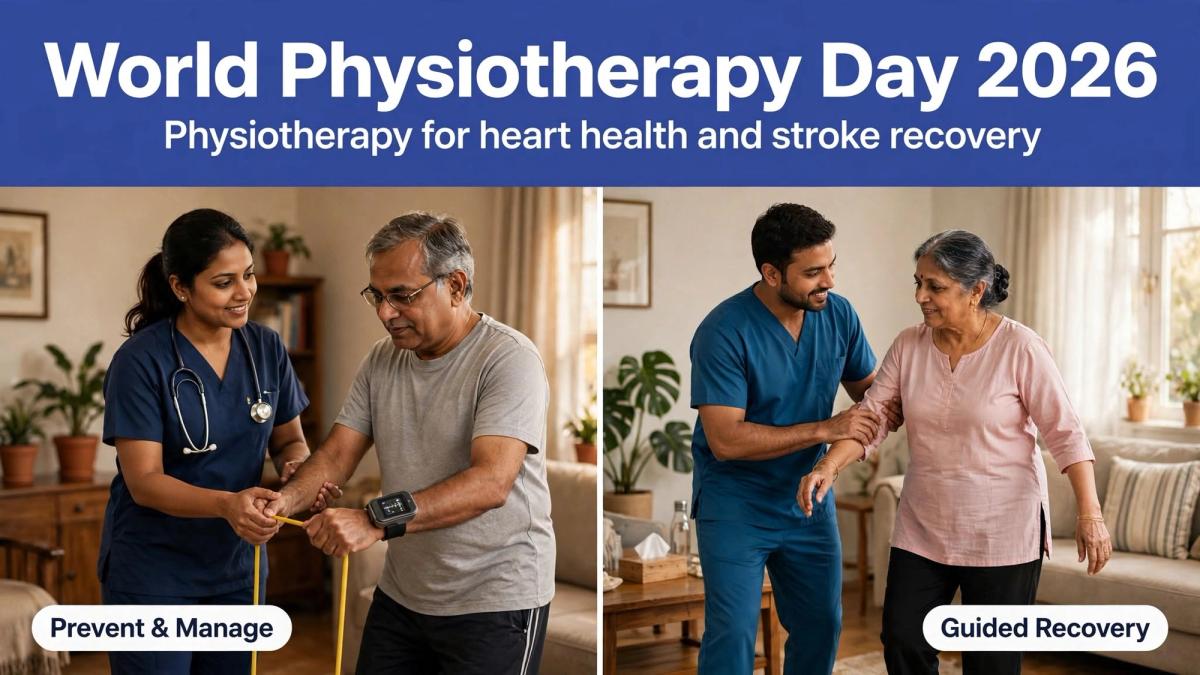
This year's World Physiotherapy Day theme is cardiovascular disease and stroke. Learn how physiotherapy at home helps prevent, manage, and recover from both.
World Physiotherapy Day 2026: What the Theme Means for Your Family's Heart Health
Every September 8th, the global physiotherapy community marks World Physiotherapy Day — and this year's theme lands on something that touches nearly every Indian family eventually: the role of physiotherapy in preventing, managing, and recovering from cardiovascular disease and stroke.
The numbers behind this year's theme are worth sitting with. Cardiovascular disease claims over 20.5 million lives globally each year — more than 30% of all deaths worldwide — and 85% of those are from heart attacks and strokes specifically. More sobering still: over three-quarters of these deaths occur in low- and middle-income countries, India included. This isn't a distant statistic. It's the reason physiotherapy deserves a bigger role in how Indian families think about heart health, not just injury recovery.
Physiotherapy Isn't Just for After a Heart Attack or Stroke
There's a common misconception that physiotherapy only matters once something's already gone wrong. This year's World Physiotherapy Day theme pushes back on that directly — physiotherapists play a role at every stage:
Prevention
Physiotherapists can help identify people at higher risk of heart disease and guide them toward safe, sustainable physical activity before a cardiac event happens. This matters because the evidence here is genuinely strong: just 30 minutes of exercise, five times a week, can reduce stroke risk by 25%. That's not a marginal number — it's one of the most impactful, low-cost interventions available for a condition that's otherwise devastating to treat after the fact.
Management
For those already living with cardiovascular disease, physiotherapy helps build safe activity levels gradually, under proper guidance, reducing the chance of a second cardiac event while improving day-to-day function.
Rehabilitation
For stroke survivors specifically, exercise-based physiotherapy has been shown to improve physical function, mobility, balance, and quality of life — and this holds true at every stage of recovery, from the hospital bed to long-term community-based rehab. We've covered this in depth in our guide to stroke rehabilitation at home, which walks through what a structured recovery program actually looks like.
Why This Matters More at Home Than People Realize
A gym-based or clinic-based exercise program works for some patients. But for elderly patients, post-stroke patients with mobility limitations, or anyone recovering from a recent cardiac event, getting to a clinic can itself be a barrier — ironically keeping people from the exact intervention that would help them most. Home-based physiotherapy removes that barrier entirely. Our guide to physiotherapy at home covers how a trained physiotherapist builds a safe, progressive program in a patient's own home, with the same clinical rigor as an in-clinic session.
What You Can Do This Month
- If a family member has cardiovascular risk factors (high blood pressure, diabetes, a sedentary lifestyle) but no diagnosed condition yet — this is a good moment to ask their doctor about a physiotherapist-guided activity plan, not wait for a crisis to force the conversation.
- If someone in your family is recovering from a stroke or cardiac event — consistent, guided physiotherapy is one of the most evidence-backed things you can do for their recovery trajectory.
- If mobility or travel is the barrier — home-based physiotherapy exists precisely to remove that obstacle.
Want to build a physiotherapy plan around heart health or stroke recovery for a loved one? Talk to Caroline Healthcare about our home physiotherapy services.
Frequently Asked Questions
Can physiotherapy really help prevent a stroke or heart attack?
Yes — guided physical activity is one of the most well-evidenced interventions for reducing cardiovascular risk, with regular exercise shown to cut stroke risk by roughly a quarter.
Is physiotherapy safe for someone who's already had a heart attack or stroke?
Yes, when properly guided — this is exactly what cardiac and stroke rehabilitation physiotherapy is designed for, with intensity and progression tailored to the patient's specific condition and recovery stage.
How is home physiotherapy different from going to a clinic?
The clinical approach is the same — a trained physiotherapist builds and adjusts a program based on the patient's needs. The difference is removing the barrier of travel, which matters enormously for elderly or mobility-limited patients.
When should physiotherapy start after a stroke?
Generally as early as safely possible, often beginning in the hospital and continuing without a gap after discharge — early, consistent rehabilitation genuinely affects long-term outcomes.