H1N1 in Delhi: Why It’s More Dangerous for Elderly Parents
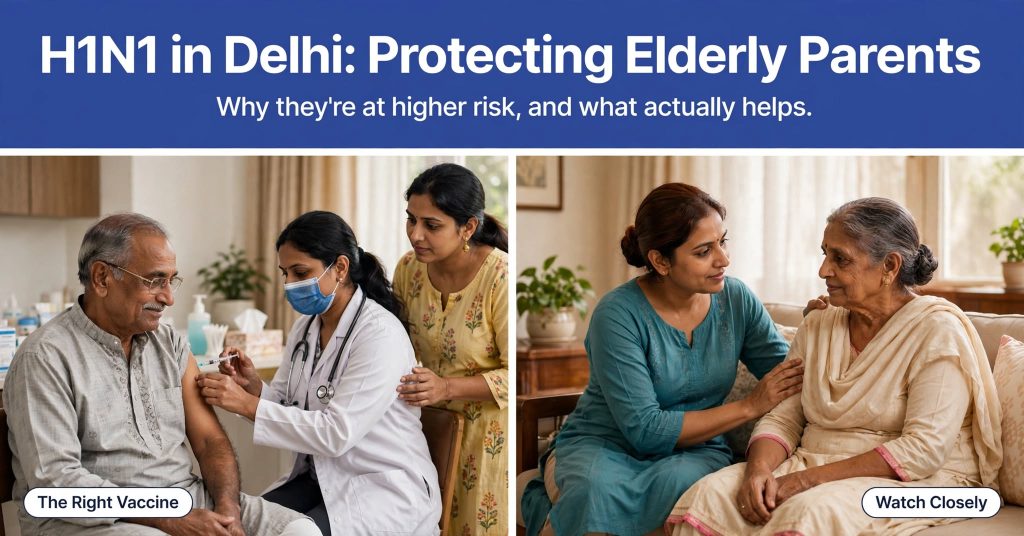
H1N1 in Delhi: Why It’s More Dangerous for Elderly Parents — And How to Protect Them
If you have an elderly parent living in Delhi-NCR right now, this is worth five minutes of your attention. The city’s H1N1 (swine flu) surge has gotten sharply worse just in the past week, and there’s a specific, science-backed reason it hits older adults harder than almost anyone else — one that changes what “protecting them” should actually look like.
The Surge, As of Right Now
Delhi has recorded 3,000 total influenza cases in 2026, including 2,308 confirmed H1N1 infections as of August 25 — an eightfold jump from the 229 cases recorded in the same period last year. ICMR has confirmed H1N1 now accounts for 97–98% of all circulating Influenza A cases in the city, and testing data from Agilus Diagnostics, a major reference lab network, shows nearly 1 in 3 people tested for flu symptoms in the past week came back positive. Delhi Chief Minister Rekha Gupta convened an emergency review meeting in response.
(Note: if you read our earlier guide on Delhi’s “triple viral threat” from a few days ago, these numbers have already moved well past what we reported then — that’s how fast this is escalating.)
Why Elderly Parents Face Disproportionate Risk
This isn’t just “older people get sicker in general.” There’s a specific, two-part mechanism doctors point to:
1. The Aging Immune System Fights the Virus Less Effectively
Immunosenescence — the natural decline in immune function with age — means an older person’s body simply doesn’t mount as strong a defense against the virus itself. Combined with common conditions like diabetes, heart disease, chronic kidney disease, or COPD, which are common among elderly Indians, this raises the risk of the infection escalating to pneumonia, sepsis, or respiratory failure.
2. Standard Flu Vaccines Protect Them Less Too
Here’s the part most families don’t know: even when an elderly person gets vaccinated, a standard-dose flu shot generates roughly half the antibody response in someone over 60 compared to a younger adult, because the aging immune system doesn’t respond to vaccination as robustly either. This is exactly why international guidelines (and increasingly, Indian geriatric experts) specifically recommend high-dose or adjuvanted flu vaccines for seniors — formulations designed to compensate for this weaker response — rather than whatever standard shot happens to be available.
The scale of this risk is easy to underestimate. A peer-reviewed 2026 study in Influenza and Other Respiratory Viruses estimated influenza causes roughly 5.3 million illnesses and over 36,000 hospitalizations among older Indian adults annually. A separate national study cited by the Journal of the Indian Academy of Geriatrics found influenza claims an estimated 1.25 lakh lives in India each year — with roughly two-thirds of those deaths occurring in people 65 and older. And yet, national data suggests fewer than 2% of elderly Indians currently receive an annual flu vaccine at all.
Warning Signs That Look Different in Elderly Patients
This matters as much as prevention. In younger adults, H1N1 usually announces itself clearly — high fever, aches, obvious illness. In elderly patients, the picture can be quieter and easier to miss:
- Confusion or increased disorientation (sometimes the first sign, before fever is even noticeable)
- Reduced appetite or fluid intake, rather than dramatic symptoms
- Low-grade fever instead of a high spike — or sometimes no fever at all
- General weakness or unusual fatigue
If a parent “just seems off” during this season, it’s worth taking seriously rather than waiting for textbook flu symptoms to appear.
Protecting Elderly Parents: What Actually Helps
- Ask specifically about high-dose or adjuvanted flu vaccine formulations when booking a vaccination for a parent — not just “the flu shot.” Availability varies, so this is worth a direct conversation with their doctor or a vaccination provider now, before the season peaks further.
- Limit unnecessary exposure to crowded indoor spaces during this surge specifically — this is a temporary, situational precaution, not a permanent lockdown.
- Everyone in the household should follow basic respiratory hygiene — masking around an elderly parent if you’re symptomatic yourself, frequent handwashing, and staying away entirely if you’re unwell.
- Watch for the subtler warning signs above, not just fever — and don’t wait to seek care if something seems different, even without a dramatic symptom.
- Have a plan for testing and care access in advance, rather than figuring it out during a 2 a.m. crisis.
How Caroline Healthcare Can Help Right Now
- Daily home monitoring for elderly patients during this surge — a nurse tracking subtle changes (appetite, alertness, hydration) that a family checking in by phone might miss.
- Coordinating vaccination logistics, including helping confirm which vaccine formulation is appropriate for your parent’s specific health profile, in consultation with their doctor.
- Supportive home care if infection occurs — hydration support, symptom monitoring, and knowing exactly when a case needs to escalate to hospital care versus safe home management.
- Reducing hospital exposure for parents who don’t need to be there — since hospitals are, right now, exactly where infection risk concentrates.
Frequently Asked Questions
Is the regular flu vaccine at my local pharmacy good enough for my elderly parent?
It offers some protection, but international and emerging Indian geriatric guidance specifically recommends high-dose or adjuvanted formulations for adults 60+, since standard-dose vaccines produce a weaker response in older immune systems. Ask their doctor directly what’s available and appropriate.
My parent seems a little “off” but has no fever — should I worry?
Possibly, yes. Confusion, reduced appetite, or unusual fatigue can appear before or instead of fever in elderly H1N1 patients. When in doubt, get it checked rather than waiting for more obvious symptoms.
Should my elderly parent avoid leaving the house entirely right now?
Not necessarily — but avoiding unnecessary crowded indoor spaces during this specific surge is a reasonable, temporary precaution, especially if they have underlying health conditions.
How is this different from the general dengue/swine flu/H3N2 guide you published earlier?
That post covers the broader seasonal picture for all family members. This one goes deeper on the specific, science-backed reasons H1N1 hits elderly parents harder, and what protecting them specifically requires — including the vaccine-dosing detail most general advice misses.
Can Caroline Healthcare help arrange the right vaccine for my parent?
We can help coordinate with your parent’s doctor and a vaccination provider to identify the right formulation and get it scheduled — reach out and we’ll walk you through it.
Worried about a parent’s H1N1 risk right now? Talk to Caroline Healthcare — we can set up home monitoring and help you navigate the right protective steps for their specific health situation.