Dengue, Swine Flu & H3N2 in Delhi-NCR 2026 – Prevention Guide
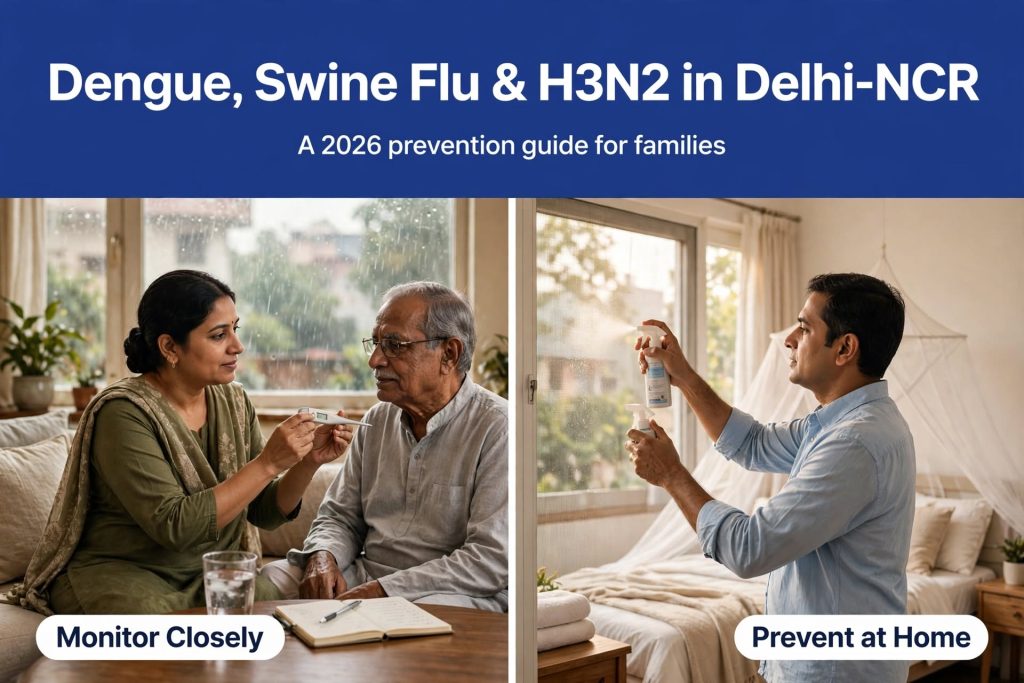
Dengue, Swine Flu & H3N2 in Delhi-NCR: A 2026 Prevention Guide for Families
Delhi-NCR is currently in the middle of what doctors are calling a “triple viral threat” — dengue, H1N1 (swine flu), and H3N2 influenza are all circulating simultaneously this monsoon season, and OPDs across the city are seeing overlapping symptoms that are genuinely hard to tell apart without testing. If you’re caring for an elderly parent, a recovering patient, or anyone with existing health conditions at home, this is worth understanding clearly — not out of alarm, but because early recognition changes outcomes.
The important context first: India’s Union Health Ministry, ICMR, and the National Centre for Disease Control have stated clearly that this season’s numbers, while elevated, are consistent with expected seasonal patterns and do not currently indicate cause for panic. This guide reflects that same balance — informed and prepared, not alarmed.
What’s Actually Happening Right Now
As of late August 2026, Delhi has recorded 1,777 H1N1 (swine flu) cases this year — a roughly six-fold increase over the 229 cases recorded in the same period last year — alongside 246 dengue cases, 80 malaria cases, and 19 chikungunya cases. No H1N1 deaths have been reported in Delhi this year so far. The Delhi government has placed 35 hospitals under special surveillance, with referral testing labs at AIIMS and NCDC, and daily monitoring meetings are ongoing at the district level.
Health authorities note that dengue’s actual seasonal peak typically hits in September and October — meaning the current numbers are likely to keep climbing before they fall.
Telling Them Apart: Why It’s Confusing
Dengue, H1N1, and H3N2 share overlapping early symptoms — fever, body aches, fatigue, headache — which is exactly why doctors are urging testing rather than guesswork:
- Dengue: High fever, severe headache, pain behind the eyes, joint/muscle pain, skin rash, and (in more serious cases) bleeding gums or easy bruising.
- H1N1 (swine flu): Fever, cough, sore throat, runny or blocked nose, headache, body aches, fatigue, and sometimes nausea or vomiting.
- H3N2: Similar to H1N1, but doctors report it often causes a more prolonged fever and cough, occasionally progressing to pneumonia in vulnerable patients.
None of these should be self-diagnosed or self-medicated. The government’s advisory is explicit on this point: don’t take antivirals or antibiotics without medical guidance, and get tested if symptoms are persistent or worsening.
Who’s Most at Risk
This is where it matters most for the families we work with. Elderly patients, anyone with diabetes or heart disease, and patients already recovering from surgery or illness face meaningfully higher risk of complications — including pneumonia requiring ICU care — from any of these three infections. A mild fever in a healthy 30-year-old and the same fever in a frail 75-year-old with comorbidities are two very different situations.
Prevention: What Actually Helps
Official government guidance, consistent across dengue and influenza prevention, comes down to a manageable set of habits:
- For mosquito-borne illness (dengue, chikungunya, malaria): Eliminate standing water around the home (a mosquito breeding source), use mosquito nets or repellents, and wear full-sleeved clothing during peak mosquito hours (early morning and dusk).
- For respiratory illness (H1N1, H3N2): Cover your mouth and nose when coughing or sneezing, wash hands frequently with soap or sanitizer, avoid crowded indoor spaces where possible, wear a mask in crowded settings, and avoid close contact with anyone showing symptoms.
- General: Stay well-hydrated, get adequate rest, eat a balanced diet, and — this one matters — if you’re unwell, stay home rather than pushing through and exposing others, especially elderly family members.
When to Manage at Home vs. When to Seek Immediate Care
Manage carefully at home, with monitoring, if: symptoms are mild (low-grade fever, mild cough, body aches) in an otherwise healthy person, and there’s someone available to track temperature, hydration, and any changes.
Seek medical care promptly if: fever is high or persistent beyond 2–3 days, there’s difficulty breathing, chest pain, severe abdominal pain, persistent vomiting, bleeding or easy bruising (a dengue warning sign), or if the patient is elderly, has underlying conditions, or is a young child.
How Caroline Healthcare Can Help
For families managing a vulnerable patient through this season, we can help without unnecessary hospital exposure — a genuinely useful thing to avoid right now, since hospitals are exactly where infection risk concentrates:
- Home-based monitoring: A nurse can track temperature, hydration, and warning signs daily, catching deterioration early without repeated hospital visits.
- IV fluids and supportive care at home: For dehydration or when oral intake drops, this is often manageable at home under proper nursing supervision rather than requiring admission.
- Telehealth coordination: Quick physician check-ins (see our guide on telemedicine and home healthcare) mean a doctor can assess whether home management remains appropriate, without the patient needing to travel while unwell.
- Isolation care for at-risk households: If one family member is infected, keeping vulnerable elderly relatives protected within the same home takes careful planning — our nurses can help structure that safely.
Frequently Asked Questions
Should I be worried right now?
Elevated, yes — panicked, no. Government health authorities have been explicit that current trends match expected seasonal patterns. Reasonable precautions and prompt attention to worsening symptoms are the right response, not alarm.
How do I know if it’s dengue, H1N1, or H3N2?
You often can’t tell from symptoms alone — that’s exactly why doctors are recommending testing rather than guessing. Don’t self-medicate; see a doctor for proper diagnosis, especially for an elderly or high-risk family member.
Is it safe to keep an elderly parent at home right now, or should we go to a hospital preventively?
For a healthy elderly person with no current symptoms, home remains safe with good prevention practices. If they develop symptoms, the decision depends on severity — mild cases can often be monitored at home with proper nursing support; anything severe needs prompt medical evaluation.
Can Caroline Healthcare test for these infections at home?
We can coordinate sample collection and testing logistics with diagnostic partners, and provide the nursing monitoring and home-based supportive care around a confirmed diagnosis. For the initial diagnosis itself, a doctor’s evaluation is the right first step.
Where can I check the latest official numbers?
Delhi government and NCDC update figures regularly — we’ve linked the official NCDC seasonal influenza page below rather than relying on any single number staying accurate for long.
Have a vulnerable family member you’re worried about this season? Talk to Caroline Healthcare — we can help set up home monitoring and supportive care so hospital visits stay reserved for when they’re truly needed.