Delhi AQI After Diwali: Why Some Apps Show 1,000+ and What You Should Do Now
November 9, 2026 · Caroline Healthcare
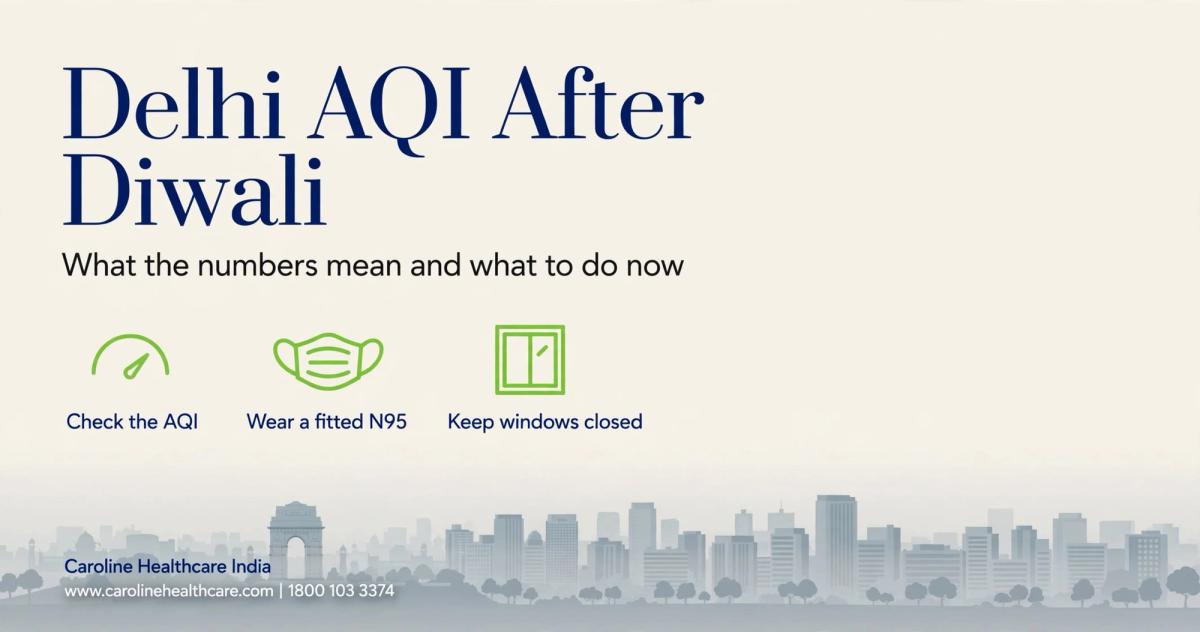
Delhi AQI after Diwali is Severe. Learn why some apps show 1,000+, the warning signs, and 10 steps to protect your family at home.
Diwali is over, but the air in Delhi NCR has not recovered. On the morning after Diwali, a thick grey haze hung over the city, and many people saw frightening AQI numbers on their phones, some even above 1,000. If you are searching for Delhi AQI after Diwali, wondering what those numbers mean, or worried about your parents and children, this guide explains what is happening and what to do at home right now.
Delhi AQI After Diwali 2026: What the Numbers Say
Here is a quick summary of what was reported on 8 and 9 November:
- Delhi’s overall AQI on 9 November was about 368, in the Very Poor category, according to CPCB data reported by the media.
- Around 15 monitoring stations recorded Severe air, with readings above 400. The highest, at Burari Crossing and Sonia Vihar, were 441.
- The Air Quality Early Warning System said the air in Delhi was likely to stay in the Severe category from 9 November for the next few days.
- A private platform, AQI.in, reported readings as high as 1,760 in the night of 8 November, falling to 663 by the next morning.
Numbers change by the hour, so check an official source for the latest reading near you.
Why Do Some Apps Show AQI 1,000+ When CPCB Shows Around 400?
This is one of the most common questions after Diwali. India’s official AQI, published by the Central Pollution Control Board (CPCB), runs from 0 to 500. Anything above 400 is Severe.
Some private apps and sensor networks show higher figures. Readings can differ because platforms use different sensors, different locations, different averaging times and different calculation methods. A reading taken near fireworks at 1 am can spike far above a 24-hour average for the whole city.
So what should you believe? Use the official CPCB figure for the overall picture, and treat a very high app reading as a sign that the air right around you may be worse than average. Either way, the safe response is the same: take protective steps whenever the AQI is above 300.
What Does Severe Air Do to Your Body?
The CPCB describes Severe air as affecting healthy people and seriously impacting those with existing diseases. The main culprit is PM2.5, tiny particles that travel deep into the lungs and can enter the bloodstream. The World Health Organization says long-term exposure raises the risk of respiratory infections and heart disease.
Even healthy adults can feel:
- Burning or watery eyes
- A scratchy throat or dry cough
- Headache or tiredness
- Mild breathlessness during activity
Some people need extra care: children, older adults, pregnant women, and people with asthma, COPD, heart disease or diabetes.
Warning Signs You Should Not Ignore
Watch for changes from the person’s normal. Common signs include:
- A cough or wheeze that is new or getting worse
- Breathlessness during everyday tasks
- Tightness or discomfort in the chest
- Unusual tiredness, dizziness or confusion
- Eye, nose or throat irritation that does not settle
Call a doctor if these appear or increase. Call 112 straight away for severe breathlessness, chest pain, bluish lips or sudden confusion.
What to Do Right Now: 10 Steps When AQI Is Severe
- Stay indoors as much as possible. Postpone morning walks, jogging and outdoor yoga. Do gentle exercise indoors instead.
- Keep windows and doors closed. Open them briefly only when the air is better.
- Wear a well-fitted N95 mask when you must go out. A mask only works if it fits snugly. Cloth masks filter much less. If you have a heart or lung condition, ask your doctor first, because some people find masks tiring.
- Run a HEPA air purifier in the room where you spend the most time, usually the bedroom. Keep doors closed and clean or replace filters on time.
- Keep indoor air clean. Avoid incense, mosquito coils and smoking indoors, use a damp mop instead of dry sweeping, and use the chimney or exhaust fan when cooking.
- Drink water regularly and eat balanced meals with fruits and vegetables.
- Take regular medicines on time and keep inhalers within reach. Never change doses on your own.
- Limit travel. If possible, work from home or use online classes. If you drive, keep the windows up and use the recirculation mode.
- Check the AQI from official sources such as the CPCB website or the SAMEER app, and plan your day around it.
- Do not add to the smoke. Avoid more firecrackers and never burn leaves, garbage or waste to keep warm.
Extra Care for Children, Older Adults and People with Health Conditions
- Children: Keep them indoors, avoid outdoor play and sports, and watch for cough, wheeze or tiredness.
- Older adults: Keep routines and medicines steady, give them a clean, closed room, and keep the doctor’s number close. See our guide to protecting elderly parents from Delhi air pollution. [Internal link: add your elderly parents and air pollution post here]
- Pregnant women: Avoid smoky and crowded places, and speak to your doctor if you feel breathless or unwell.
- People with asthma, COPD, heart disease or diabetes: Follow your doctor’s plan closely, keep prescribed medicines handy, and call early if symptoms worsen.
Do Masks, Air Purifiers and Home Devices Really Help?
- N95 masks can filter fine particles well when they fit properly.
- HEPA air purifiers can reduce fine particles in a closed room. They support good care but do not replace medical care.
- Pulse oximeters and nebulizers can be useful guides at home, but they have limits. Ask your doctor which readings matter and use a nebulizer only as prescribed.
- Home remedies and self-medication are not a substitute for medical advice. Do not start antibiotics, steroids or other medicines on your own.
When to See a Doctor or Go to the Hospital
See a doctor soon if cough, wheeze or tiredness lasts more than a couple of days, or if an existing condition seems to be getting worse. Go to the hospital or call 112 immediately for severe breathlessness, chest pain, bluish lips, confusion or fainting.
How Long Will the Smog Last?
It depends on weather, wind speed and how much smoke is being added, such as from stubble burning, traffic and firecrackers. The early warning system expected Severe air for a few days after Diwali, but forecasts change. Check updates from official sources every day, and keep up protective habits until the AQI comes down.
Delhi NCR also follows the Graded Response Action Plan (GRAP), with measures that tighten as the air worsens. Following official advisories on traffic, construction and outdoor activity helps everyone.
When Home Healthcare Can Help
After a smog spike, some families need more than rest and masks. Home healthcare can help when someone:
- Needs regular nursing care, medicines or monitoring
- Has a long-term lung, heart or diabetes condition that needs follow-up
- Is recovering after illness, surgery or a hospital stay
- Needs physiotherapy or medical equipment at home
At Caroline Healthcare India, we provide home healthcare in Delhi NCR, including doctor visits at home, nursing care, physiotherapy, ECG and lab tests, and medical equipment rental. Service availability varies by location, so please call 1800 103 3374 or visit www.carolinehealthcare.com to confirm what is available in your area. For emergencies, call 112.
Frequently Asked Questions
Can the AQI really be above 1,000?
The official CPCB scale runs from 0 to 500. Some private apps and sensor networks can show readings above that. These numbers are not directly comparable with the official AQI, but a very high reading near you is still a good reason to take precautions.
What is a Severe AQI in Delhi?
The CPCB classifies an AQI of 401 to 500 as Severe. It can affect healthy people and seriously impact those with existing diseases.
Is it safe to go outside when the AQI is above 400?
It is best to stay indoors as much as possible. If you must go out, wear a well-fitted N95 mask, keep the trip short and avoid heavy traffic areas.
Can I exercise outdoors when the air is Very Poor or Severe?
It is better to avoid outdoor exercise and do gentle exercise indoors instead.
Which mask is best for pollution?
A properly fitted N95 mask filters fine particles better than a cloth or loose surgical mask. People with heart or lung conditions should check with their doctor first.
Does an air purifier help?
A HEPA air purifier can reduce fine particles in a closed room. Use it where you spend most of your time and keep the filter clean.
When should I see a doctor?
If cough, wheeze or breathlessness is new, getting worse or lasting more than a couple of days, or if an existing condition seems worse. For severe symptoms, call 112.