Post-Operative Physiotherapy at Home – Top Exercises & Tips
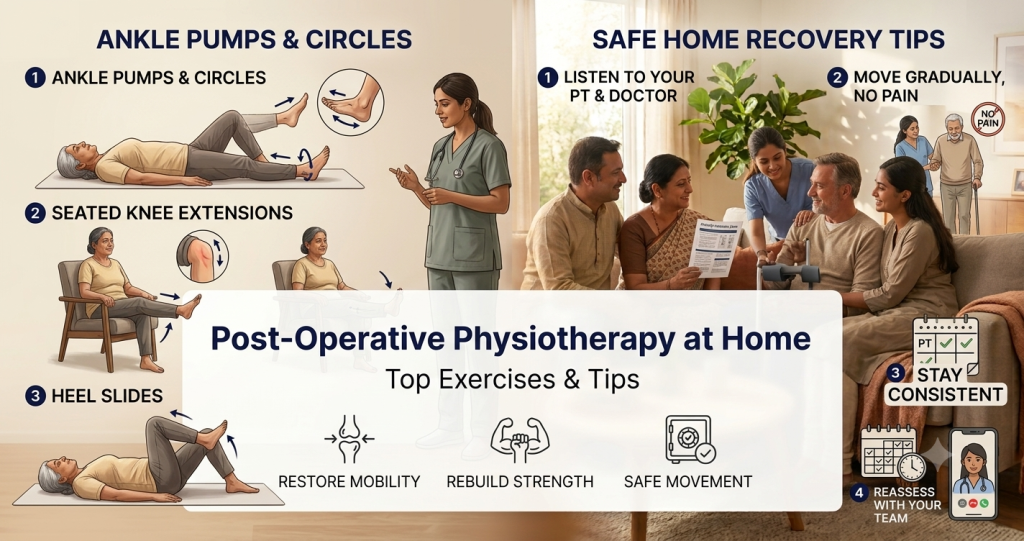
Post-Operative Physiotherapy at Home: Top Exercises & Tips
Surgery is only half the journey — what happens in the weeks afterward often determines how fully and how quickly someone gets back to their normal life. For most post-surgical patients, that recovery isn’t just about rest. It’s about movement, done the right way, at the right time.
Here’s what home physiotherapy after surgery actually involves, and how to get it right.
Why Early Mobility Matters
It might seem counterintuitive to encourage movement so soon after an operation, but gentle, guided activity is one of the most effective tools for recovery.
Faster Recovery, Fewer Complications
Staying still for too long after surgery increases the risk of stiffness, blood clots, and muscle weakness. Controlled movement — even just sitting up, standing, or short walks — helps circulation, keeps joints from stiffening, and supports the body’s natural healing process.
The Psychological Boost of Staying Active
Recovery isn’t only physical. Patients who can move, even a little, tend to feel more in control of their situation and less anxious about their progress. Small wins — walking to the window, climbing one stair — build real confidence heading into the weeks ahead.
Key Home Physiotherapy Exercises
The right exercises depend entirely on the type of surgery, but a few categories come up again and again.
Gentle Range-of-Motion Stretches
These help prevent stiffness in joints that haven’t moved much post-surgery — think ankle circles after leg surgery, or shoulder rolls after upper-body procedures. They’re low-intensity but important groundwork for everything that follows.
Strengthening with Resistance Bands
As healing progresses, light resistance exercises rebuild muscle strength lost during bed rest or surgery. A physiotherapist will introduce these gradually, adjusting resistance as the patient’s tolerance improves.
Breathing & Respiratory Exercises
Especially after chest, abdominal, or thoracic surgery, breathing exercises help clear the lungs and reduce the risk of respiratory complications like pneumonia. Simple techniques — deep breathing, controlled coughing — are often introduced within the first day or two.
The Role of a Home Physiotherapist
Personalized Rehab Plans
No two recoveries look the same. A home physiotherapist assesses the specific surgery, the patient’s baseline fitness, and any complications, then builds a plan that progresses at a safe pace. Caroline Healthcare’s Physiotherapy Services are designed around exactly this kind of individualized care.
Monitoring Pain and Safety During Exercises
Pushing too hard, too fast, can set recovery back. A trained physiotherapist knows the difference between normal post-surgical discomfort and a warning sign that something needs attention — and adjusts the plan accordingly.
Patient & Caregiver Tips
When to Stop or Seek Help
Sharp pain, unusual swelling, or a sudden inability to move a limb are signs to pause and contact the care team immediately. Mild soreness during exercise is normal; sharp or worsening pain is not.
Setting Up the Space
A little preparation goes a long way — proper footwear, a clear path free of clutter, and enough space to move safely all reduce the risk of falls or strain during exercises.
Scheduling and Frequency
How Long and How Often
Most home physiotherapy sessions run 10–15 minutes, several times a day, rather than one long session. Shorter, more frequent sessions tend to be easier for patients to sustain, especially in the early recovery phase.
Balancing Rest and Activity
Recovery isn’t a straight line — some days will feel harder than others. The goal is steady, gradual progress, not pushing through exhaustion. A good physiotherapy plan builds in rest as deliberately as it builds in movement.
Frequently Asked Questions
Can physiotherapy really help after surgery?
Yes — targeted physiotherapy reduces stiffness and pain while improving mobility, and is closely associated with faster, smoother recoveries after most types of surgery.
What if I can’t complete an exercise?
Stop and rest, then let your physiotherapist know. They’ll adjust the exercise to match your current pain level and ability rather than pushing through.
How often should I do home exercises?
Most plans call for daily exercises, often broken into short 10–15 minute sessions two to three times a day, as prescribed by your physiotherapist.
Do I need special equipment?
Not usually — basic items like pillows, towels, and resistance bands are often enough. If additional equipment is needed, Caroline Healthcare can arrange it through our Medical Equipment services.
Are tele-physio consultations available?
Yes. When an in-person visit isn’t possible, we offer remote guidance so recovery stays on track without interruption.
Recovering well after surgery starts with the right support. Contact Caroline Healthcare to set up a personalized home physiotherapy plan.