
Vaccines for Senior Citizens in India: Flu, Pneumonia, Shingles and Tetanus Shots Explained
November 27, 2026 · Caroline Healthcare
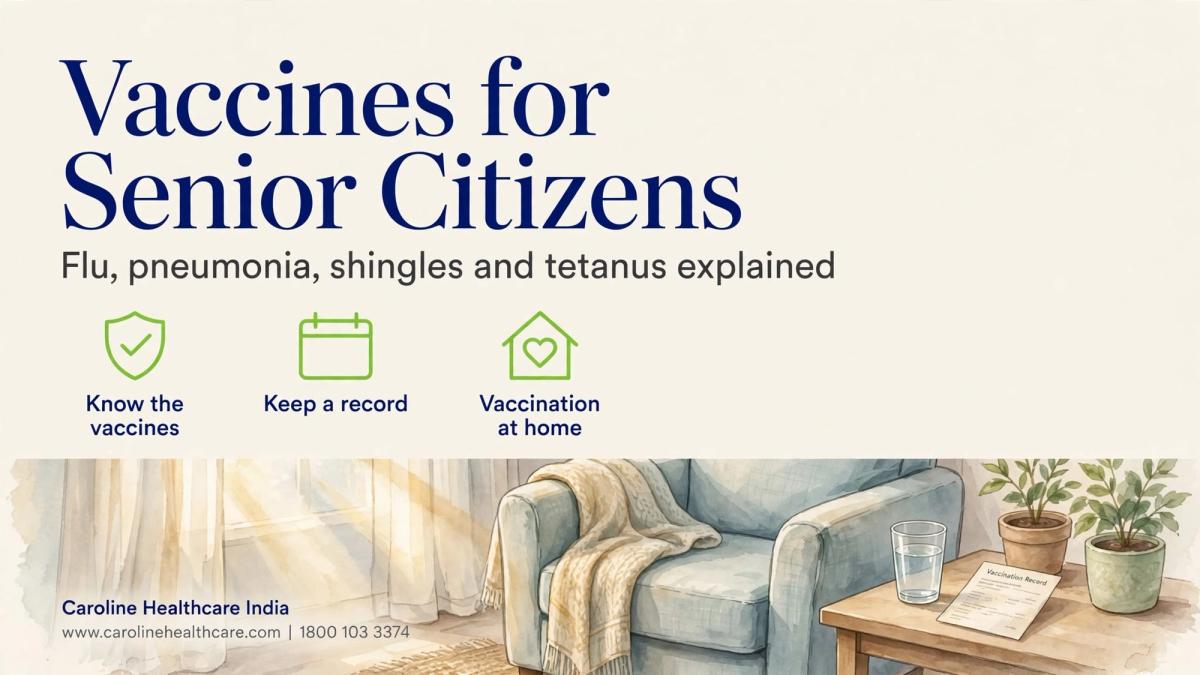
Which vaccines do senior citizens need in India? Flu, pneumonia, shingles, tetanus and hepatitis B explained, with safety tips.
Most of us know the childhood vaccination schedule by heart. But what about our parents and grandparents? In India, national immunisation programmes focus mainly on children, so many older adults never get the vaccines that could protect them from flu, pneumonia, shingles and tetanus. With winter here and flu and chest infections on the rise in Delhi NCR, it is a good time to ask: which vaccines do senior citizens need?
This guide explains the main vaccines recommended for older adults in India, why they matter, who should be careful, how to keep track of vaccines, and how vaccination at home can make it easier for your parents.
Why Do Older Adults Need Vaccines?
As we age, our immune system weakens, so infections can hit harder and take longer to recover from. Flu, pneumonia and shingles can be more serious in older adults, especially in people with diabetes, heart disease, lung disease or kidney disease. A simple infection can lead to hospital stays or complications.
Vaccines are one of the easiest ways to lower that risk. They do not make anyone invincible, but they can help protect your parents from some of the infections that cause the most trouble in later life.
Which Vaccines Are Recommended for Senior Citizens in India?
Here is a summary of the vaccines commonly recommended for older adults, based on Indian expert guidelines. Your doctor will decide what is right for each person, depending on age, health and past vaccination history.
Flu Vaccine for Elderly: Why Every Year?
The influenza virus changes from year to year, so the flu vaccine is updated and given every year. Flu can cause serious illness in older adults, including pneumonia, and can worsen heart and lung conditions.
- A yearly flu shot is advised for adults over 50 and for anyone with a long-term condition.
- Ask your doctor for the best time. In north India, many doctors suggest vaccinating before or early in winter.
- The flu shot cannot give you the flu. Mild soreness or a slight fever for a day or two is common.
Pneumonia Vaccine for Senior Citizens
Pneumonia is a serious lung infection, and the bacteria that cause it, called pneumococcus, are a common cause. Pneumococcal vaccines help protect against these infections.
There are different types of pneumococcal vaccines, and the number of doses depends on age and health. Please ask your doctor which one is right for your parent, especially if they have COPD, asthma, diabetes, heart, kidney or liver disease.
[Internal link: add your World COPD Day post here]
Shingles Vaccine in India
Shingles is a painful rash caused by the chickenpox virus waking up again years later. It can lead to long-lasting nerve pain, even after the rash heals. The risk goes up with age.
Recent Indian guidelines recommend the recombinant zoster vaccine for all adults aged 50 and above, whether or not they have had shingles before. The vaccine is usually given in two doses, and your doctor will explain the schedule.
Tetanus Booster for Adults
Tetanus bacteria can enter the body through even a small cut or wound. Adults are usually advised a Td booster every 10 years, with Tdap used once to include whooping cough protection. After a deep or dirty wound, the doctor may advise a booster sooner.
Hepatitis B and Other Vaccines for Older Adults
Hepatitis B vaccination is recommended for older adults who were never vaccinated and are at higher risk, such as people with diabetes or chronic illness. Hepatitis A and typhoid vaccines can help protect against food and water infections, especially if your parent is travelling or has a weak stomach. Your doctor can check whether MMR or chickenpox vaccines are needed.
Vaccines for Older Adults with Diabetes, Heart, Lung or Kidney Disease
People with long-term conditions are at higher risk of serious infections, so vaccines are even more important. Talk to your doctor about:
- Diabetes: flu, pneumococcal, hepatitis B and tetanus vaccines
- Heart disease: yearly flu vaccine and pneumococcal vaccine
- Lung disease such as COPD or asthma: flu and pneumococcal vaccines
- Kidney disease: flu, pneumococcal and hepatitis B vaccines
[Internal link: add your World Diabetes Day post here]
Are Vaccines Safe for Senior Citizens?
Vaccines recommended by doctors are generally safe for older adults. Common side effects are mild and settle in a day or two:
- Soreness, redness or swelling where the injection was given
- Mild fever, tiredness or body ache
Serious allergic reactions are rare. Tell the doctor or nurse before vaccination if your parent has had an allergic reaction to a vaccine, has fever or acute illness, takes blood thinners, or has a weak immune system, since the choice of vaccine may change. Call 112 straight away for swelling of the face or lips, difficulty breathing, fainting or a widespread rash after a vaccine.
Keep a Vaccination Record
It is easy to forget which vaccines were given and when. Indian guidelines encourage adults to keep a written record of every dose. Keep an adult vaccination card, note the vaccine name, date and batch, and carry it to every doctor visit.
Vaccination at Home for Senior Citizens
For older adults who find it hard to travel, or who are worried about crowded clinics in winter, vaccination at home can be a gentler option. A trained nurse visits your home, gives the vaccine, observes your parent for a short time afterwards and records the dose.
Caroline Healthcare India provides vaccination at home across Delhi NCR for babies, children, adults, seniors and pets. Availability varies by vaccine and location, so please call 1800 103 3374 or visit www.carolinehealthcare.com to confirm what is available in your area.
[Internal link: add your Vaccination at Home service page here]
Vaccine Checklist for Your Parents
- Talk to your parents’ doctor about which vaccines they need.
- Collect old vaccination records, or note what is not documented.
- Plan the flu shot before or early in winter, and ask about pneumococcal and shingles vaccines.
- Check when the last tetanus booster was given.
- Tell the nurse about allergies, medicines and recent illness.
- Keep a written record of every dose.
- Book the next dose, if one is due, before you leave.
Frequently Asked Questions
Which vaccines should senior citizens take in India?
Commonly recommended vaccines include the yearly flu shot, pneumococcal vaccine, the shingles vaccine and a tetanus booster, along with hepatitis B, hepatitis A and typhoid vaccines for people at risk. Your doctor will advise what is right for your parent.
Is the flu vaccine needed every year?
Yes. The flu virus changes, and protection from the vaccine does not last long, so older adults need a flu vaccine every year.
Is the pneumonia vaccine safe for people over 60?
Pneumococcal vaccines are generally safe for older adults. Your doctor will advise the right type and number of doses for your parent’s age and health.
At what age should I get the shingles vaccine?
Recent Indian guidelines recommend the recombinant zoster vaccine for adults aged 50 and above. Please ask your doctor.
Can diabetics take these vaccines?
Yes. Vaccines are especially important for people with diabetes, because infections can be more serious. Ask your doctor which vaccines to take.
Can more than one vaccine be given on the same day?
Often yes, depending on the vaccines. Your doctor will decide what can be given together and what should be spaced out.
What are the side effects of vaccines in older adults?
Most side effects are mild: soreness at the injection site, mild fever or tiredness. Serious allergic reactions are rare, and you should call 112 immediately if they occur.
Are adult vaccines free in India?
National immunisation programmes focus mainly on children, so adult vaccines are often paid for by the family. Prices vary, so please ask the doctor or provider.
Can bedridden or elderly patients get vaccinated at home?
Yes. Vaccination at home is a good option for patients who find travel difficult. Please call to confirm which vaccines are available for your area.
Need help caring for someone at home?
Our nurses, doctors and therapists visit you at home. Book a free assessment to get started.